Density

While discussing states of matter, i casually asked the kids when we drop a solid in liquid, does the solid float or sink? Together they told that the any solid sinks in liquid.

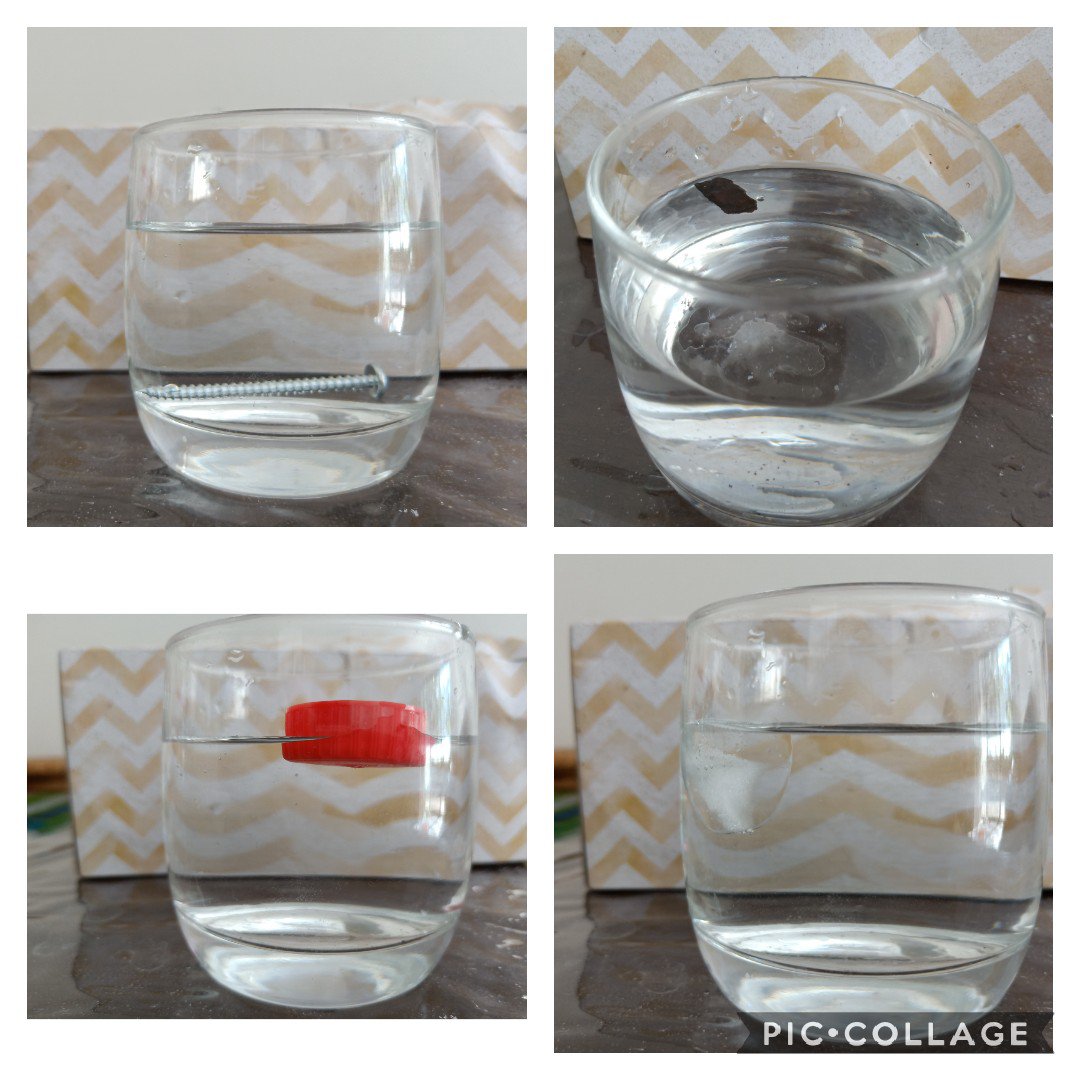
I dropped an ice block (a solid) in water ( a liquid) they were surprised to see it float. Even a block of wood or plastic floats on water. Whereas when I dropped a piece of metal like nail, it sank to the bottom.
Curiosity took us to next level. Kids were interested to know what happens when we mix two liquids? We did a simple experiment of mixing water and oil.

We took a two small glass jars. To the first, we added water followed by oil. They clearly formed two separate layers with oil on top.

But kids weren’t convinced. They thought oil is sticky so it’s denser and has to stay at the bottom. So the second jar, I added oil first followed by water. Even then oil stayed on the top. Kids mixed them hard. They were successful in making an emulsion ( mixture of water and oil) which eventually seperated to form two layers.

To clear the confusion, introduced them to the concept of Density. Density is the amount of matter contained in a unit volume of a material.

Mass is the amount of matter contained and volume is the space occupied by a material. So density is also defines as mass by volume.

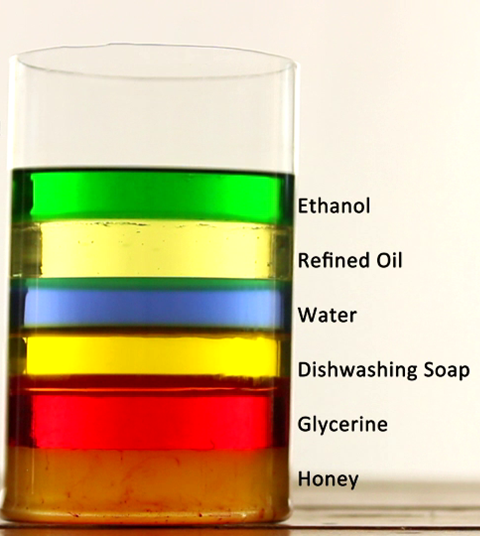
We took equal quantities of water and oil and weighed them to find that oil weighs less than water. So oil is lighter than water and floats in the top of water. Hence we concluded that denser objects/fluids sink and the lighter ones float.

Similarly, ice,wood and plastic float on water as they are less dense than water whereas a piece of nail as it is more dense than water.

The session ended with an exciting lava lamp experiment. In a big jar we poured water and oil. Then we added a drop of water based food colour (red) to it. It was a spectacular scene to see the red drop sink through the oil layer without mixing in it. Once it reached the water surface, it bursted in the water to dissolve in it.
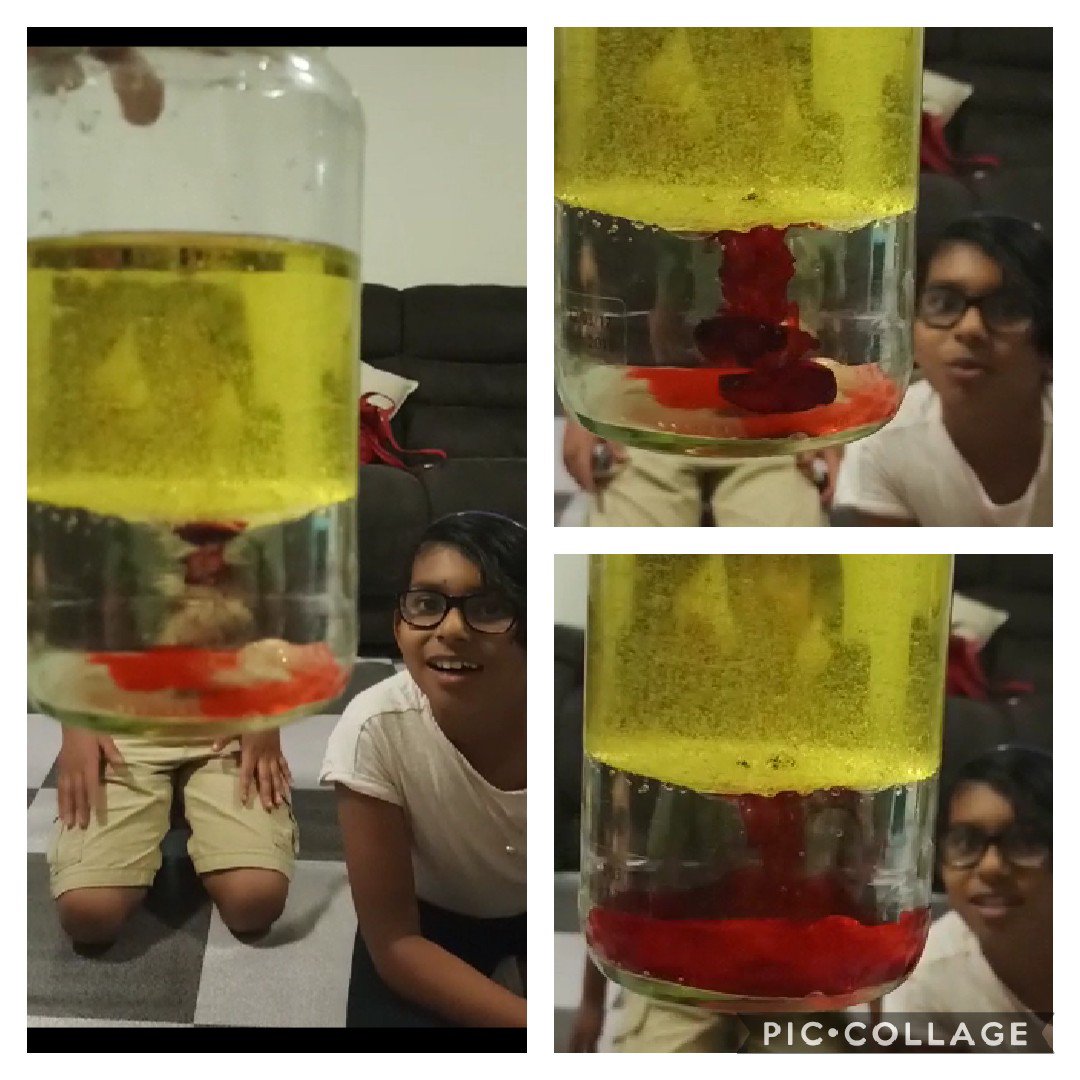
Then we dropped few Alka seltzer tablets into the jar. The tablets dissolved in water to release bubbles of carbon-di-oxide. Gas bubbles being lighter than oil rose to the top carrying a red coloured water drops along with it. When the bubbles reached the surface the broke and the red colour water drop fell to the bottom through the oil layer.

The whole process resembles a lava and hence the name Lava Lamp.

States of matter

Matter exists in 3 states… actually, 4 – Solids, Liquids, Gases and Plasma. To keep things simple I taught the kids that only three states of matter exist.

Then we started classifying the things around us under solids and liquids and gases. When it came to gases, i was surprised by the examples they gave. They seem to know Oxygen, Helium, Hydrogen and even Carbon dioxide. But they were unaware of a gas which is around us – The Air.
Kids gave a puzzled look when I said that the Air around us is a gas which contains Oxygen, Helium, Hydrogen and Carbon dioxide.

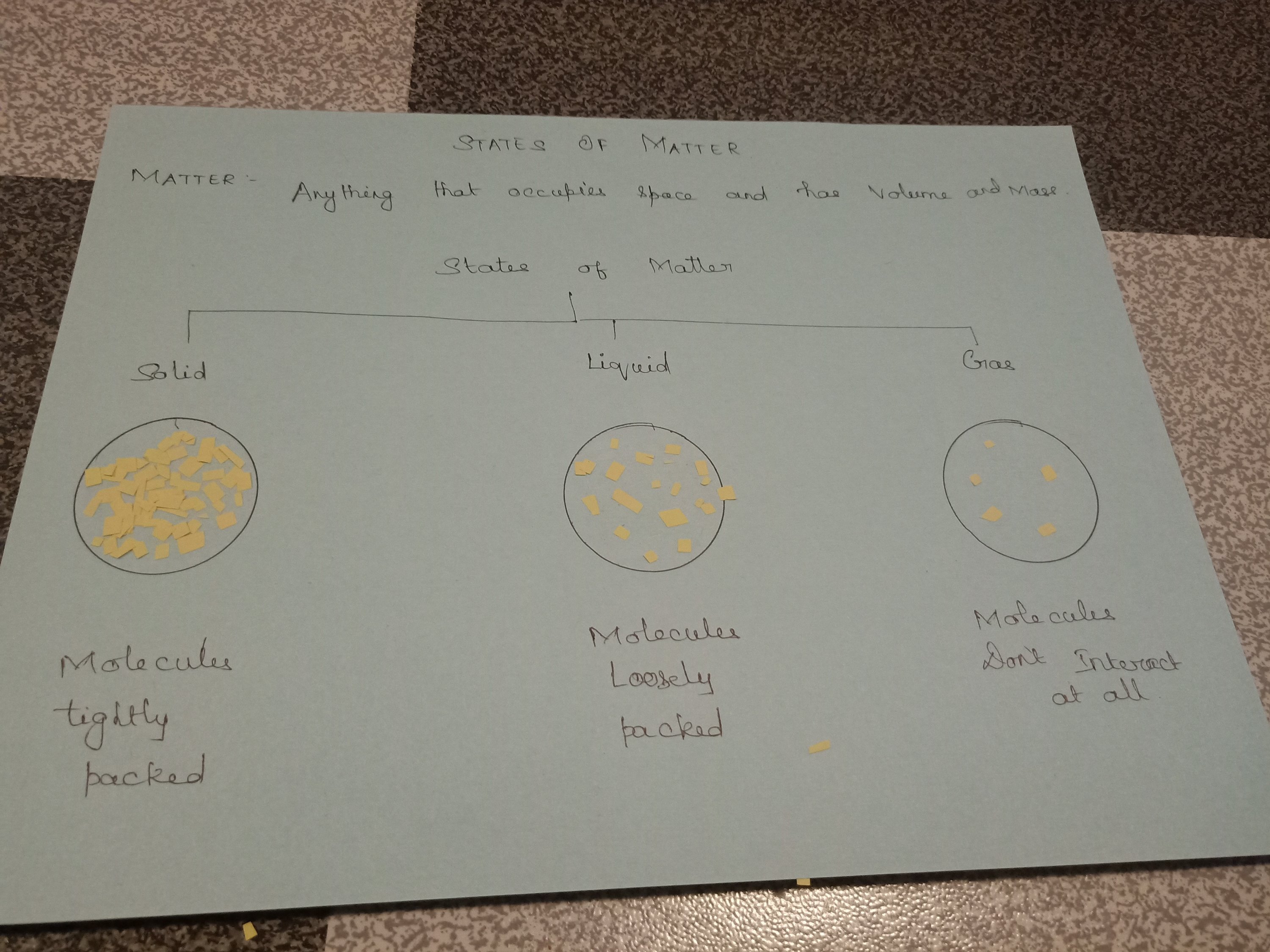
To understand the difference between the three states at the molecular level, we did a small activity.

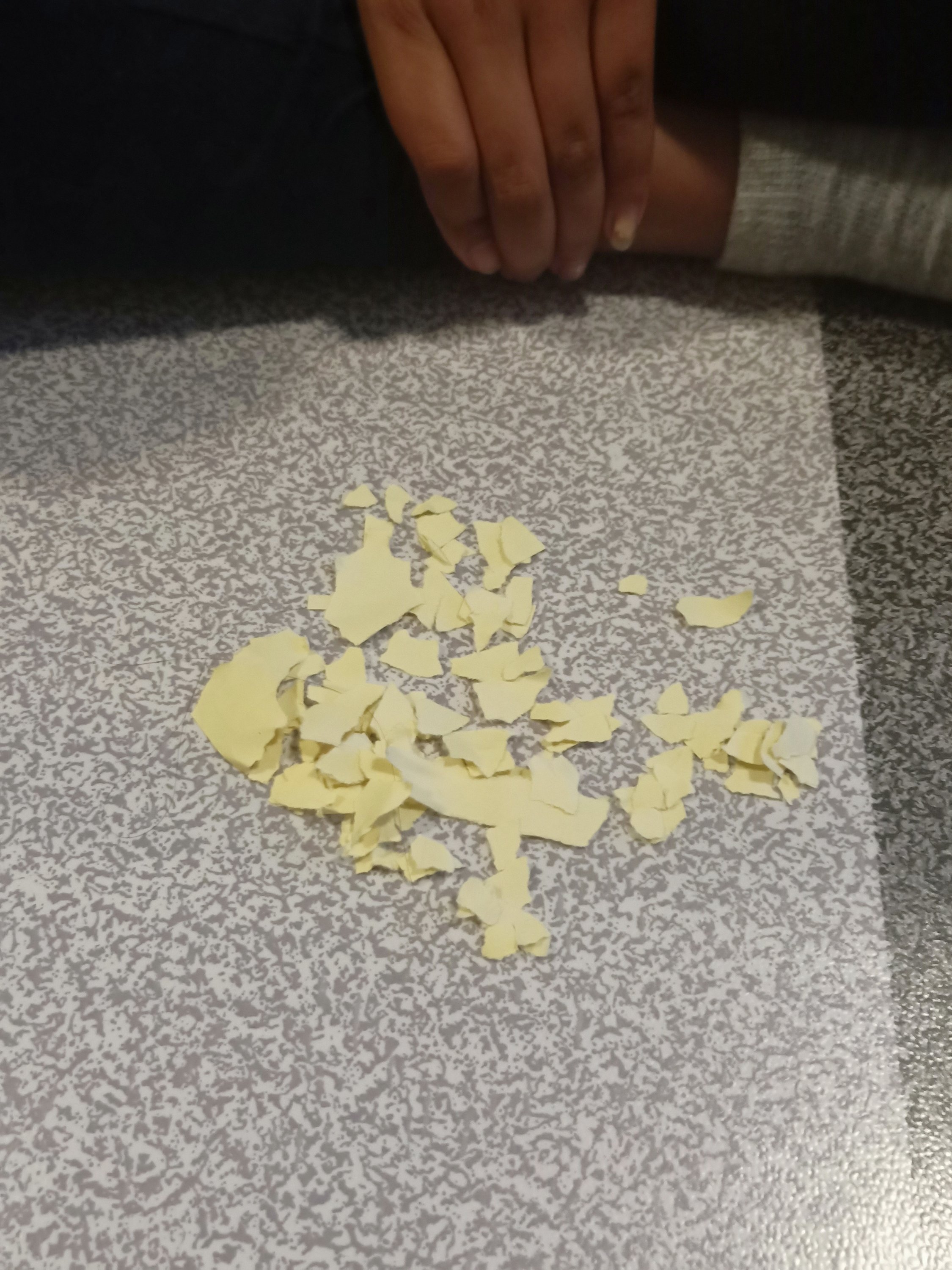
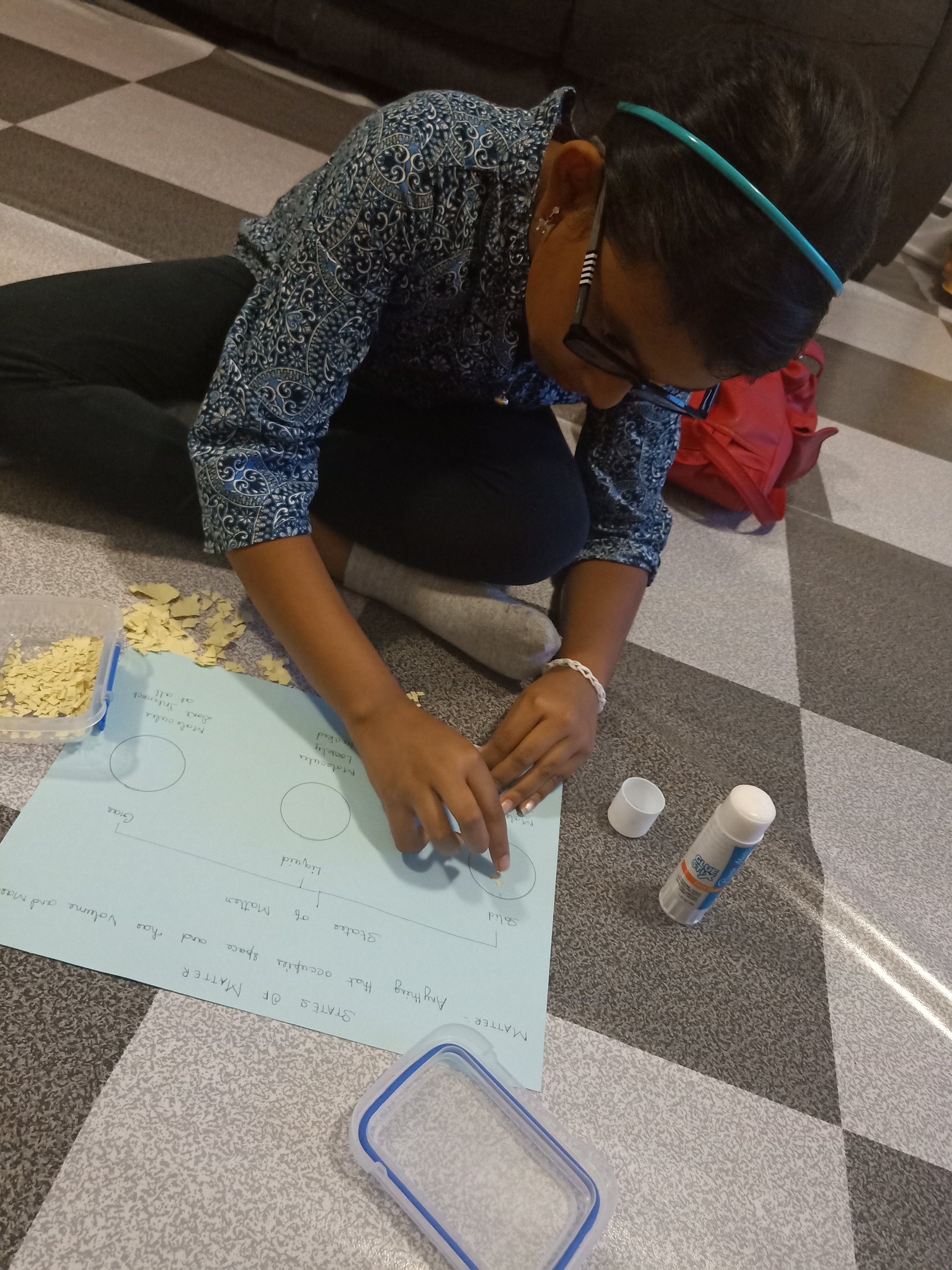
I cut a paper into tiny bits and used those small bits as molecules.

Molecules are packed tightly in solids and are strongly bonded giving rise to rigidity in solids . So kids pasted those tiny paper bits close to each other.

Molecules are packed relatively lose in liquid and are loosely bound to each other enabling the liquids to flow freely. They take the shape of the container. Kids pasted the paper bits a little away from each other.

Gas molecules move independent of each other and are not bound to each other. They occupy the entire volume of the container. So kids pasted the paper bits far away from each other.

This activity was fun. five little chatterboxes were glued to their sheets.. 15 mins of peace and silence.

To show them change from one state to the other, I took out few ice cubes from the freezer and put them in their hands. The solid ice partially melted to form liquid water. Then we transferred the blocks to a container and heated it on a stove. The blocks melted completely due to the heat. Then tiny bubbles appeared at the bottom and started raising to the surface. Soon the water started boiling. The liquid water turned into water vapour also known as steam. Now I put a cold plate in the path of the steam to find tiny water droplets condensing on the plate. As more and more steam began condensing, the water droplets grew heavy and started falling down.

“Ah! This is how rain occurs”, a kid recalled what he had learnt in school. Yes this is a water cycle! The sun heats the water from several water bodies. As the water vapour reaches higher altitudes to condense and form clouds. When it becomes too heavy for the clouds to hold, the water pours down as rain or snow.

Daylight savings time (DST)

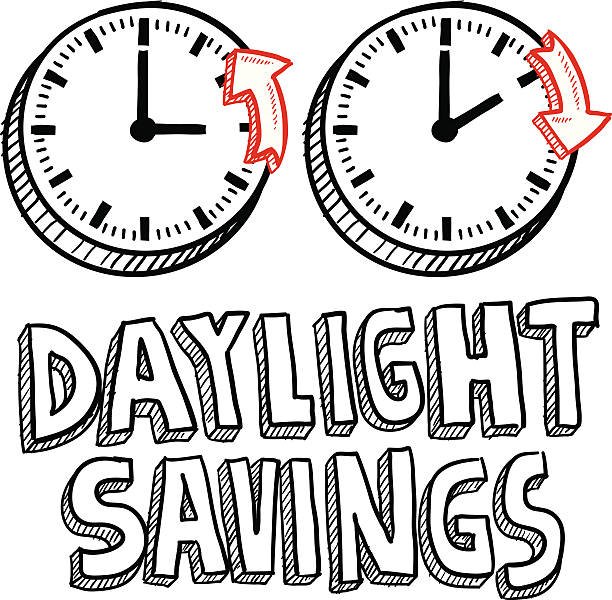
An era of heat waves comes to an end in Sydney for this year. Autumn has set and temperature has started to drip. We wake up to chill mornings only to go back to bed longing for the end of Daylight Savings Time (DST). DST ends on the 6th of April this year. Yay! Time to move our clocks backward.The concept of DST was introduced by George Hudson in 1895 merely for convenience.

During summer the daylight lasts longer than in winters. In order to make maximum use of the sunlight, the clock is advanced 1 hour during spring and then set back by an hour during autumn. So we move an hour forward than the actual time during spring and get back to the original time during autumn.

DST doesn’t happen at the same time for all the countries because they all have different seasons at different times. DST starts on First Sunday in October and ends on First Sunday in April in Australia. Whereas it starts on Second Sunday in March and ends on first Sunday in November in America.

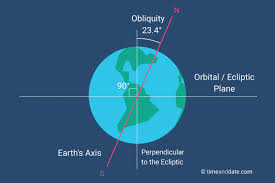
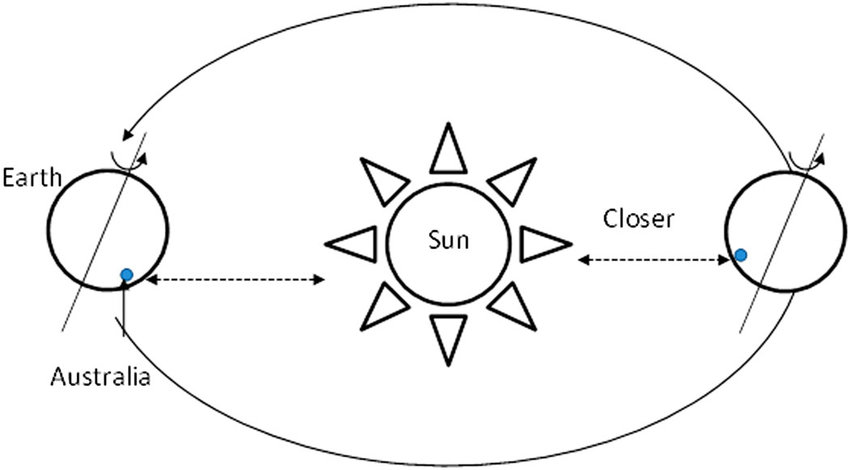
Our Earth spins around the sun with an axial tilt of 23.4° (known as obliquity) with respect to its orbit. Due to this tilt there is a large variation in the amount of sunlight falling on our planet.

This image has an empty alt attribute; its file name is images.png

This image has an empty alt attribute; its file name is download.jpg

Equator is an imaginary line on our globe, running East-West and dividing earth equally into northern and southern hemisphere.Countries close to the equator are exposed to maximum sunlight throughout the year.

Lack of significant changes in sunlight in the equatorial region is responsible for lack of seasonal changes in these places. They have uniform tropical climate throughout the year. Similarly DST is insignificant for countries closer to the poles as their day and night changes extremely with seasons.

This image has an empty alt attribute; its file name is 2018-109.jpg

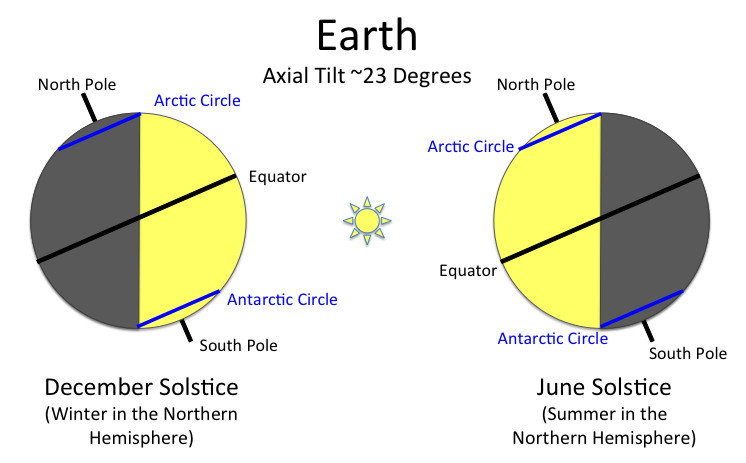
On the contrary, at a given instant, different parts of non-equatorial regions receives different amount of sunlight (due to the axial tilt). The uneven distribution of sunlight results in difference in seasons among the countries. So,when Aussies face an extreme summer, the Americans undergo the pricking winter.

This image has an empty alt attribute; its file name is the-earths-axial-tilt-affects-the-seasons-because-it-brings-australia-closer-or-further.jpg

Matter and Molecules

A bunch of 5 students ( primary school children) enrolled for my first session. All boys 😦 . I was breaking my head not knowing where to start and what to teach them first.

To make the session interesting, I had to choose a topic that would hold the interest to this gang. But then I cannot teach them some random science stuff as they have very limited knowledge on science (mostly from the cartoons they watch).

Banging my head for two days I decided start with matter and molecules. Introducing molecules at this age?.. hmmm all possibilities that they would not return for the next class.. I thought.

Matter is anything that has mass and has volume. For example air, water, book, we, etc. Atoms and molecules are the building blocks of matter. Aren’t they?Atleast if not atoms I thought that I should introduce the concept of molecules. It will help me in future to explain most of the scientific phenomena in detail.

So when they came, I asked them to tear a small piece of paper into tiny- mini pieces.. as small as possible.

Then I chose the smallest piece and told them that even that small piece has millions of tiny spheres called molecules which forms the basic building blocks of matter.

Sounds silly right? Even I thought so.. But couldn’t find an alternate way to convey the concept to primary kids.

I was feeling nervous when I asked them for feedback about the class – as if am the student and they, my examiners.To my surprise they loved the silly activity and they were thrilled to learn that things around us contained millions of particles which they can’t see with their naked eyes.

Till date they remember what molecules are and am happy that I was able to drive the point using an elementary activity.

The Know-how Science Club-A gentle way to draw young minds towards science

Hi!!!! I am Saipriya. Welcome to my world of Science. I am a physicist and i am passionate about science and teaching.Completed my doctorate from India and moved to Sydney 2 years back.

I have been conducting science club for kids in Sydney for sometime now.

With a Ph.D. in Physics and a break in my career i was left with very few opportunities in Sydney. While applying for few teaching jobs here i stumbled upon the educational trends in NSW. It was super saddening to discover that, that many children drop science (physics/chemistry/biology) by the time they reach HSC (year 11 and 12) and start looking for alternative options.

I am an Indian and obviously fact sounded shocking for me. Come on, for us engineering is life! Science and Maths are our lifelines. Remember “3 Idiots” movie??? That’s exactly how our parents are.

Donning the detective hat i dug further into the NSW curriculum only to find that children were/are exposed to very little of science and more of english and mathematics until they reach high school. And at high school they are over loaded that most of them fail to love the subject.

I stay in an apartment where we find a lots of kids.. By nature kids are curious about everything around them- right from a snail in their garden to a jet flying in the sky. They like to explore things on their own, learn on their own, do on their own. this is how they quench their curiosity.

In order to trap their curiosity and quench it , channelize their thoughts and energy and to kindle their interest in science i have started “The Know-how Science Club”. Its an humble measure to cultivate interest in science the fun way through loads of activities. This initiative is fueled by my passion for teaching and love for children.

Watch out for this blog space to learn more about science,our club and our activities.